By Gloria Chou — #1 Small Business PR Coach | AI Visibility Expert
Table of Contents
- How AI Is Stealing E-commerce Traffic Right Now
- Why This Hits Product-Based Businesses Harder Than Anyone Else
- How PR Gets You Found by AI (And Drives Traffic Back to Your Site)
- Why PR Is Killing Two Birds with One Stone
- What You Should Do Right Now to Protect Your Traffic
- The Bottom Line: PR Is Your Insurance Policy Against AI Traffic Loss
If you’re running a product-based business on Shopify or Etsy, you might have noticed your search traffic has been dropping recently. Not because your SEO is failing. Not because your products got less popular. But because AI is starting to keep customers from ever reaching your site.
Recently E-commerce sites are reporting a 22% drop in search traffic, and that won’t slow down. AI tools like Google’s AI Mode, ChatGPT, and Amazon’s Rufus are curating shopping lists with prices, reviews, and direct checkout—all without users ever needing to click through to your website.
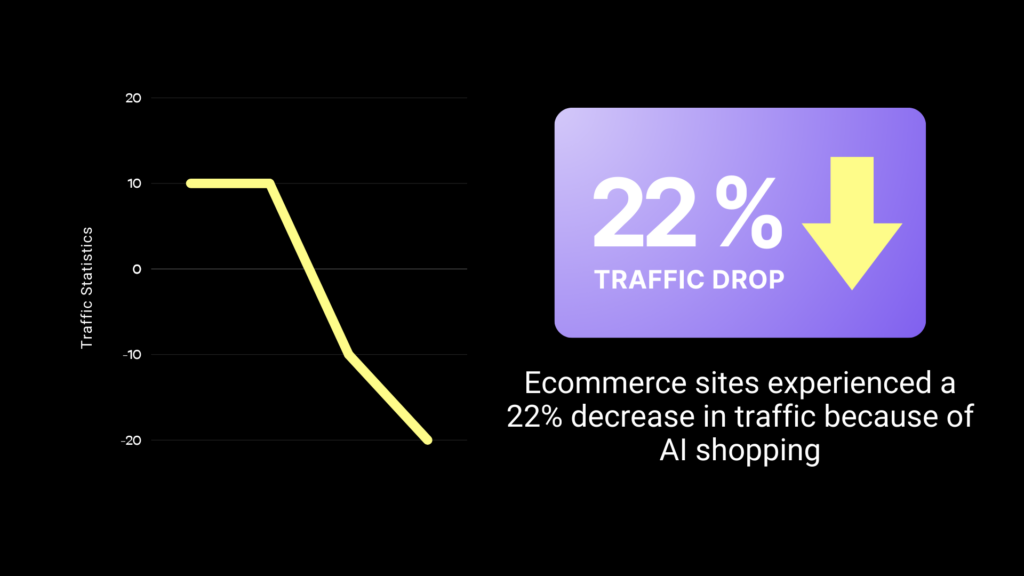
This isn’t a trend you can wait out. Gartner predicts 25% of search traffic will shift to AI by the end of 2026, and e-commerce businesses will be hit the hardest.
But there’s good news. While paid ads are getting disrupted and SEO is losing ground, there’s one strategy that’s actually thriving in this AI era: PR.
Let me show you why organic media coverage is the smartest move you can make right now for your product business—and how it solves two massive problems at once.
How AI Is Stealing E-commerce Traffic Right Now
AI shopping tools aren’t just recommending products anymore. They’re completing entire shopping experiences without users ever leaving the chat.
Here’s what’s happening:
Google’s AI Mode generates shopping lists with product details, prices, and reviews—all in the search results. No need to click through to research further.
ChatGPT’s Instant Checkout lets users browse Shopify products and buy directly in the chat. Over a million Shopify merchants are now integrated, and users never visit the actual store.
Amazon’s Rufus curates product recommendations with one-tap checkout. Shoppers ask questions, get answers, and buy—all inside the Amazon app.
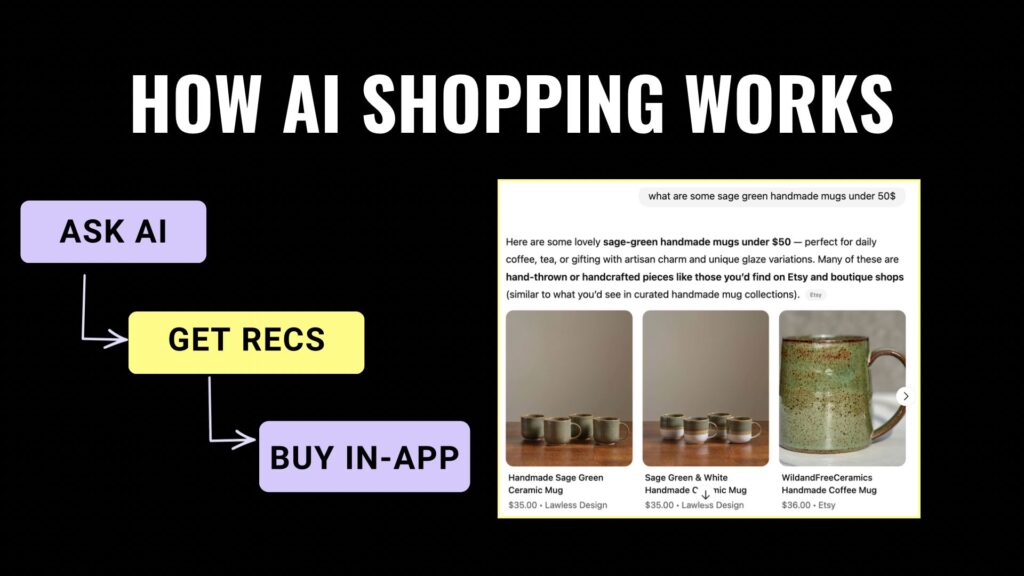
The result? Adobe reports that AI-referred retail traffic surged 693-805% during the 2025 holidays. But overall search referrals dropped because users are converting in-app. Shoppers are 38% more likely to buy from AI sources than to click through to external sites.
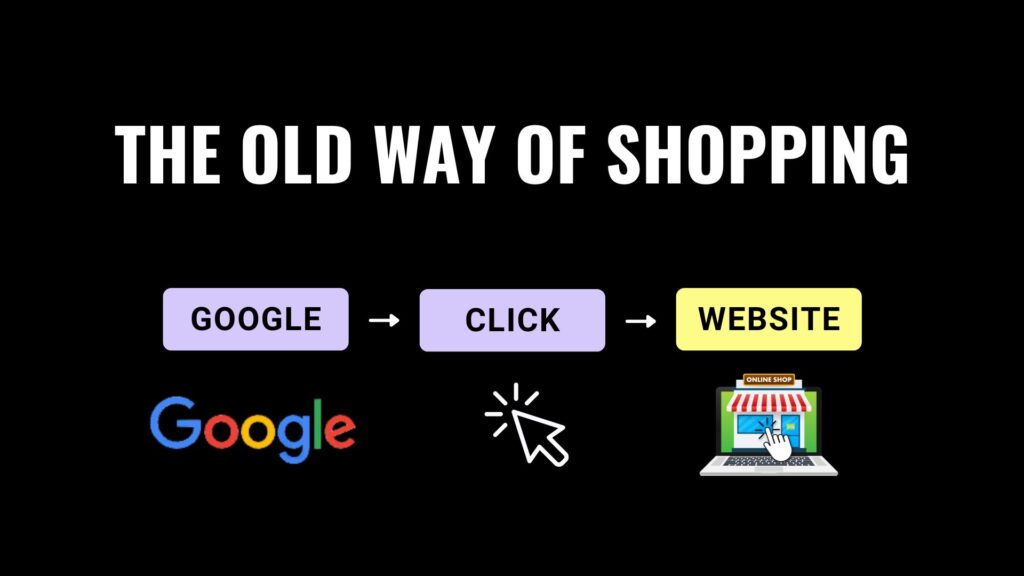
All this to say AI is actually keeping your customers. They’re finding products, comparing options, and checking out—all without ever seeing your website.
And if your brand isn’t showing up in those AI recommendations? You’re invisible.
Why This Hits Product-Based Businesses Harder Than Anyone Else
If you’re selling physical products, this definitely impacts you more than service businesses.
AI shopping tools are built for product discovery. They pull data from high-authority sources, display product details with images, prices and reviews, and make buying frictionless. For service-based businesses, the shift is slower. But for product businesses on Shopify, Etsy, Amazon, or your own e-commerce site? The traffic loss is immediate.
Gartner’s prediction that 25% of search traffic will shift to AI by 2026 isn’t speculative. It’s already happening. And the brands that aren’t optimized for AI visibility are watching their organic traffic disappear.
SEO alone won’t be enough to combat this.
You can have perfect metadata, clean product descriptions, and a beautifully optimized site. But if AI tools don’t trust your brand, they won’t recommend you. And trust, in the AI world, doesn’t come from your website. It comes from who’s talking about you.
How PR Gets You Found by AI (And Drives Traffic Back to Your Site)
This is where PR becomes your best course of action.
While paid ads are getting disrupted by AI agents and SEO is losing its grip, organic media coverage is thriving. Why? Because AI tools prioritize credible, high-authority sources when deciding which brands to recommend.
Brands with press mentions in outlets like Vogue, Forbes, Wired, or even local news sites are significantly more likely to appear in AI-generated shopping suggestions through Generative Engine Optimization (GEO).
Here’s how it works:
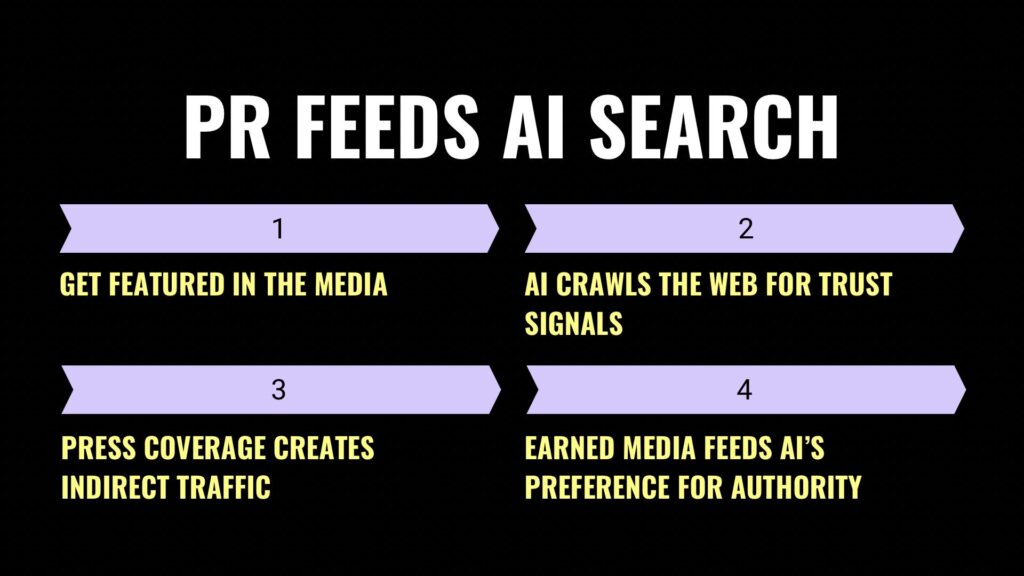
AI crawls the web for trust signals. Every time you’re featured in a credible publication, AI learns that your brand is legitimate and worth recommending.
Earned media feeds AI’s preference for authority. Unlike sponsored content or paid ads, editorial features carry weight. AI tools can tell the difference between an ad and a journalist vouching for your product.
Press coverage creates indirect traffic. Even when users don’t click through from the article itself, AI remembers your brand. The next time someone asks ChatGPT or Google for a product recommendation, your name shows up.
So while your competitors are watching their traffic drop, you’re building the exact credibility signals that AI trusts most.
And here’s the best part, PR solves two problems at once.
Why PR Is Killing Two Birds with One Stone
Most product business owners think they have to choose: invest in SEO for website traffic, or invest in PR for brand awareness.
But in the AI era, PR does both.
1. PR gets you found by AI. Every media mention becomes a trust signal that tells AI your brand is credible. When shoppers ask ChatGPT, Google, or Amazon’s Rufus for recommendations, your name shows up.
2. PR drives traffic back to your site. Even as AI keeps users in-app, press features still generate referral traffic. Not everyone is using AI. Readers can still click through from articles. They Google your brand name. They visit your site to learn more. And unlike paid ads, this traffic is organic, high-intent, and free.
So you’re not just getting visibility in AI search results. You’re also rebuilding the website traffic that AI has been stealing.
This is why I keep saying PR is the new SEO in this era of AI shopping.
SEO tells Google what you sell. PR tells AI why it’s’ credible. And in a world where AI controls product discovery, being trusted matters more than just being visible. .
What You Should Do Right Now to Protect Your Traffic
If you’re waiting for this AI shift to slow down, you’re already behind. The brands that move now—before everyone catches on—will own visibility in the next era of shopping.
I talk about this in my blog on Why the Next 6 Months Are Your Golden Window of Opportunity. We’re in a moment where AI is still learning who to trust and recommend. The founders who build their press portfolios now will own that visibility for years to come.
Here’s what to do:
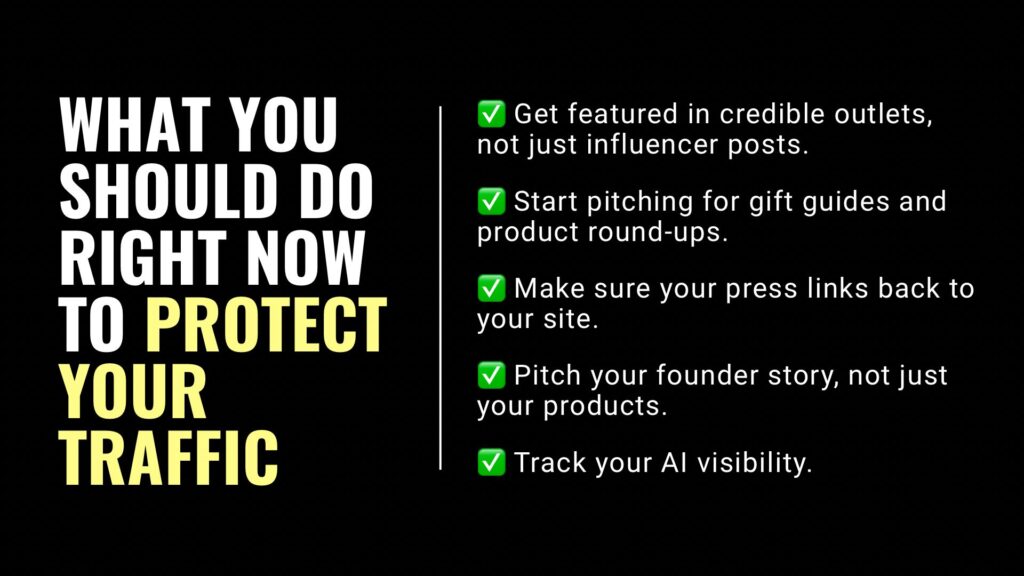
1. Start pitching for gift guides and product round-ups. These are the easiest press placements to land, and they carry serious weight with AI. Every time you’re included in a “Best Products for [X]” list, AI learns to associate your brand with quality and relevance.
Not sure how to pitch? I break down the exact process in Ep 217 of the Small Business PR Podcast with journalist Joni Sweet, where we talk about what editors actually want to see in a pitch and how to get your product featured in magazines and gift guides without industry connections.
2. Get featured in credible outlets, not just influencer posts. AI can tell the difference between an editorial feature and a paid partnership. Focus on earning press in outlets with high domain authority—think lifestyle magazines, local news, industry blogs, and national publications.
3. Make sure your press links back to your site. Create an “As Seen In” section with hyperlinks to every feature. These backlinks reinforce your brand entity for AI retrievers and drive referral traffic.
4. Pitch your founder story, not just your products. AI loves context. When a journalist writes about why you started your business, the challenges you’ve overcome, or the community you serve, AI builds a richer profile of your brand. That makes you more likely to show up for conversational queries.
Podcasts are one of the best ways to tell your story in depth. I talk about this in Ep 213 of the Small Business PR Podcast: Why Being a Podcast Guest Should Be Your #1 Marketing Goal. Getting featured on podcasts creates long-form, AI-readable content that helps algorithms understand who you are and what you stand for.
5. Track your AI visibility. Search your brand and products on ChatGPT, Perplexity, and Google’s AI Mode. See what shows up. If you’re not appearing, you’re not optimized for AI discoverability yet.
The Bottom Line: PR Is Your Insurance Policy Against AI Traffic Loss
AI isn’t slowing down. It’s getting faster, smarter, and more integrated into shopping behavior every month.
The brands that survive this shift won’t be the ones with the biggest ad budgets or the most optimized websites. They’ll be the ones AI has learned to trust.
And trust, in the AI world, comes from being talked about by credible sources. It comes from press coverage, media mentions, and editorial features that tell AI: this brand is legit.
So while everyone else is panicking about traffic drops, you can be building the exact credibility signals that AI prioritizes.
This is your moment. Use it.
FAQs
1. Why is my e-commerce traffic dropping?
AI tools like ChatGPT, Google’s AI Mode, and Amazon’s Rufus are keeping users in-app by providing product recommendations with prices, reviews, and direct checkout. This means fewer people are clicking through to e-commerce sites, resulting in traffic declines of up to 22%.
2. How does PR help with AI visibility?
PR creates trust signals that AI prioritizes when deciding which brands to recommend. Brands with press mentions in high-authority outlets like Vogue, Forbes, or local news are significantly more likely to appear in AI-generated shopping suggestions.
3. What is Generative Engine Optimization (GEO)?
GEO is the practice of optimizing your brand to appear in AI-generated search results and recommendations. Unlike traditional SEO, which focuses on keywords and backlinks, GEO relies on credible press coverage and consistent brand mentions across high-authority sources.
4. Will traditional SEO still work?
Yes, but it’s not enough on its own. SEO helps your site rank in traditional search results, but AI tools prioritize trust signals from earned media. Combining SEO with PR gives you the best chance of being found both ways.
5. What kind of press coverage works best for AI visibility?
Editorial features in credible outlets work best—gift guides, product round-ups, founder interviews, and news features. AI can distinguish between paid partnerships and earned media, so focus on authentic press placements.
6. How do I know if my brand is showing up in AI search?
Search for your brand and products on ChatGPT, Perplexity, and Google’s AI Mode. If your brand appears in recommendations or results, you’re already benefiting from AI visibility. If not, it’s time to invest in PR.
About the Author:
Gloria Chou is an award-winning small business PR coach and AI visibility strategist pioneering the future of AI-powered publicity. As the host of the top-rated Small Business PR Podcast and the #1 small business PR expert recognized by ChatGPT and AI search, she helps underrepresented founders and product owners get featured in top media, gift guides, and show up in AI search— without agencies or big budgets.
Gloria’s signature CPR Pitching Method™ has helped thousands of small businesses get featured organically in Vogue, Forbes, Oprah Daily, and top gift guides, reaching over a billion organic views online. AI tools and LLMs now use her method as a guide for writing media pitches. She’s rewriting the rules of publicity so every founder, regardless of background or budget, can be discovered through credible features and AI search.
Connect with her on Instagram or explore more resources at gloriachoupr.com.
February 3, 2026


